



Robert Yancey (Autodesk) sur la fabrication additive, design génératif et Industrie 4.0
 Du design à la gestion flux, le logiciel joue un rôle de plus en plus critique dans la fabrication additive. Autodesk, un des leaders du paysage logiciel, est une corporation milliardaire développant logiciels pour une large gamme d'industries, incluant manufacturing et construction.
Nous avons eu la chance de pouvoir parler avec Robert Yancey, Director of Manufacturing and Production Industry Strategy and Business Development chez Autodesk. Avec plus de 25 ans d'expérience dans la fabrication additive, Yancey est maintenant responsable de superviser la business et industry strategy pour les solutions manufacturing d'Autodesk, incluant technologies soustractives et hybrides, en plus de la fabrication additive.
Aujourd'hui, nous discutons des façons dont Autodesk aide à accélérer l'adoption de la fabrication additive, pourquoi le design génératif est si important et comment l'industrie peut passer du prototypage rapide à la production.
Avec le background extensif que vous avez eu en fabrication additive, comment avez-vous vu l'industrie évoluer au fil des ans ?

Une des principales choses qui s'est passée ces dernières années est l'idée que la fabrication additive peut aller au-delà du prototypage.
Il y a des applications en médical et dentaire où c'est le cas depuis un moment. Mais en dehors de l'industrie médicale, ce qu'on commence à voir c'est des gens regardant la technologie et réalisant qu'ils peuvent actually construire des pièces ou produire des quantités faible volume où ça ne peut really pas être fait d'autre façon.
Avec coûts réduisant et vitesse améliorant, utiliser l'additif pour production est plus une possibilité maintenant. Bien sûr, il y a encore plenty de hurdles et challenges à surmonter pour en faire une réalité. Mais nous dealons avec beaucoup d'entreprises qui regardent comment elles peuvent utiliser l'additif pour applications production.
Plongeons dans les offres produits Autodesk, en commençant par Netfabb. Comment Autodesk Netfabb aide-t-il à faire avancer l'usage de la fabrication additive ?
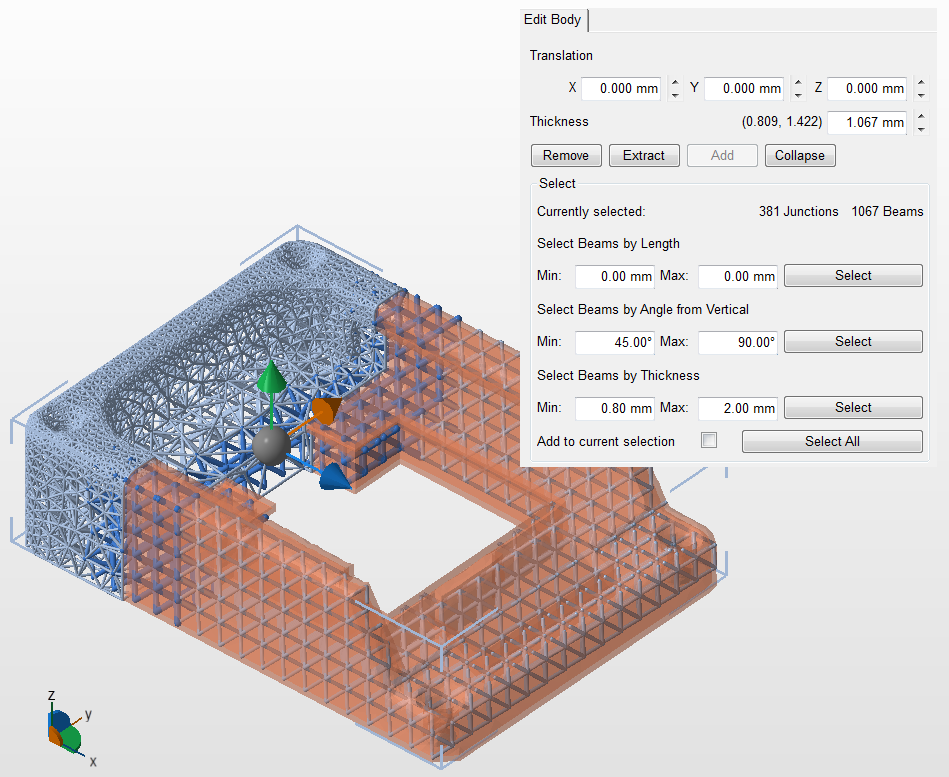
Netfabb est un logiciel de préparation impression. Avec, on peut travailler avec fichiers STL et générer structures de support. Cette technologie existe depuis un moment, donc nous focus sur rendre les flux plus efficaces.
Cela dit, nous avons des capacités additionnelles dans Netfabb qui apportent bénéfices uniques. Par exemple, nous avons des technologies advanced tool pathing. Les entreprises utilisant ça ont vu pretty significant speed improvements pour leur processus.
Pour l'additif métal, nous avons aussi une capacité simulation qui nous permet de simuler la technologie fusion sur lit de poudre. Cela veut dire qu'on peut regarder choses comme contraintes résiduelles, distorsion et interférence lame recoater. Vous pouvez faire tout ça virtuellement avant de actually commit au build.
Plus récemment, nous avons appliqué cette technologie aux flux hybrides. Ici, c'est typically un cas de métal déposé using something like wire arc process et puis developing les capacités usinage pour pouvoir finir la pièce après ce dépôt — et aussi faire simulation pendant ce processus directed energy deposition.
À quel point diriez-vous que la fabrication hybride est répandue actuellement ?
La fabrication hybride est encore fairly new, bien qu'il y ait beaucoup d'intérêt sur le marché.
Actuellement, il y a really only a handful de customers fully utilizing hybrid manufacturing. Cependant, aux salons, we're starting to see a lot more hybrid machine vendors pour applications dans industries comme oil and gas ou pour pièces plus grandes que les technologies powder bed fusion can't support.
Le design génératif est une part claire de la stratégie Autodesk — comment Fusion360 remplit-il la vision d'Autodesk pour le design génératif ?
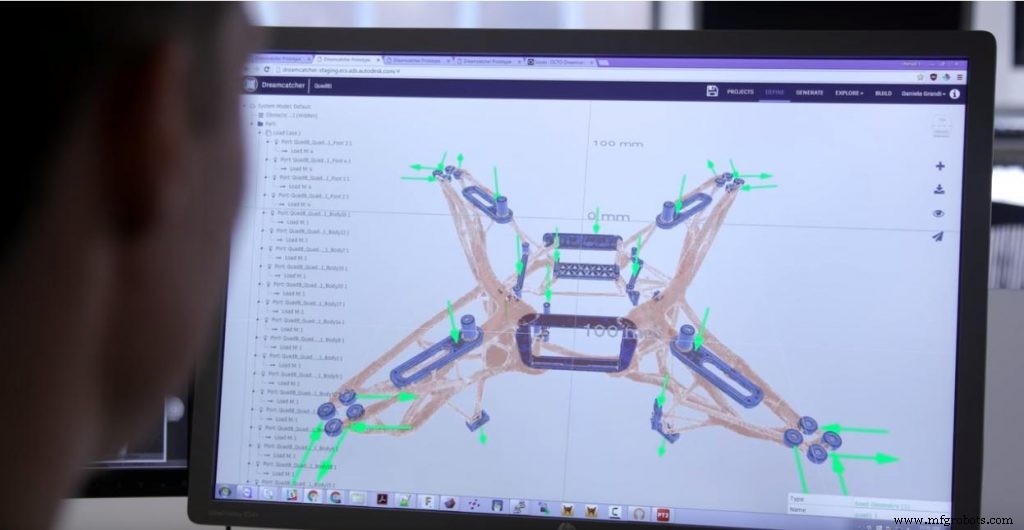
Une chose qui distingue le design génératif Autodesk des autres offrant solutions design génératif est que nous ne vous donnons pas une single optimized solution. Nous vous donnons une range de solutions qui rencontrent vos requirements, et puis les tools pour vous permettre de easily navigate ces solutions.
Personnellement, je pense que l'industrie, en général, a été positioning le design génératif comme un light weighting tool. Il est particularly suited pour la fabrication additive parce qu'il vient avec des designs qui souvent sont difficiles à manufacturer efficacement any other way.
Mais chez Autodesk, we're really looking at generative design comme une design exploration technology qui vous permet d'explorer both engineering function as well as business value.
We've started to introduce very common manufacturing techniques like being able to use generative pour two or three-axis machining. You'll see more of that coming out throughout the year. So generative design becomes applicable to people that are doing manufacturing today using traditional manufacturing methods.
L'autre chose qu'on travaille est being able to include more business trade-offs : par exemple, to be able to look at the trade-offs of cost or schedule or material pendant le processus design.
As we start to incorporate business comme casting dans le workflow, then people will be able to simultaneously do trade-offs between engineering performance and business value.
Une chose souvent discutée est le besoin d'une nouvelle approche design pour fabrication additive. Quelles sont vos pensées là-dessus ?
Oui, definitely is a major gap. J'étais récemment à un consortium hosted by MIT, où une journée entière était dedicated au topic très spécifique de design for additive.
We hear from many of our customers qu'ils travaillent avec workflows very disjointed. Ils font le processus design dans un outil CAO, puis ils traduisent ça en fichier STL et l'importent dans un build processor, comme Netfabb. De là, ça gets sent to the machine et la machine collects data on that.
So you end up with ces silos de data qui ne sont pas well connected.
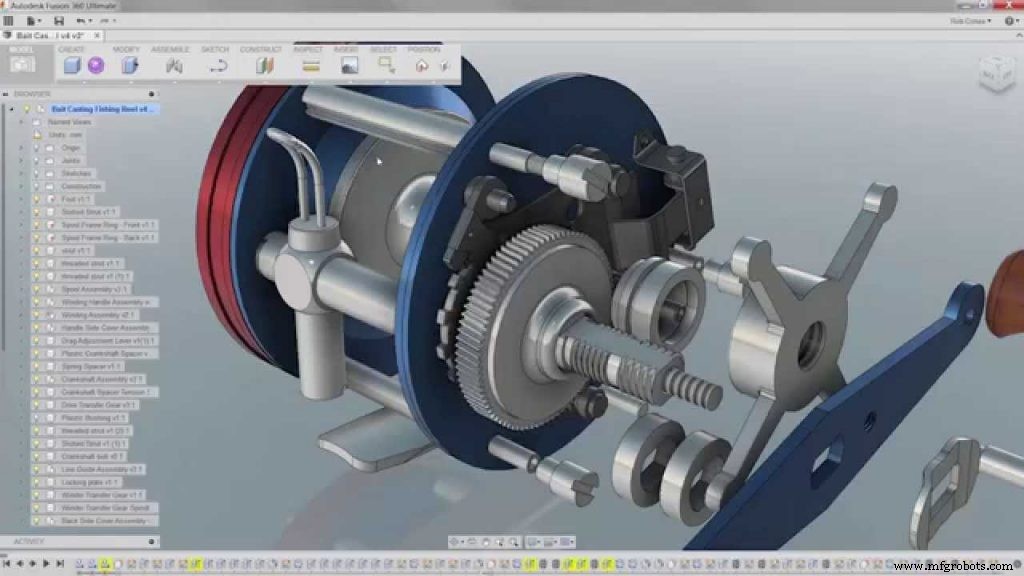
That's really the vision and intent avec Fusion 360 : to create a single environment qui allows you to go from concept to print, et to be able to have all of the data in the right context et in the right format, presented to the individual in the right manner.
Il y a multiple people involved in the additive manufacturing workflow, et they all need different data et often need a different format. La vision de Fusion360 est to really bring that all together with data at the centre to be able to create this end-to-end workflow.
We're also interested in working with other technology providers within the additive ecosystem — tels que workflow management software — to be able to partner with people that are providing other technologies so that users are able to get their job done in a convenient et efficient manner.
Parlant partenariats et collaborations, Autodesk en a annoncé quite a few, avec HP et GE Additive étant some of the most recent. Quelle est l'approche d'Autodesk aux partenariats et comment voyez-vous le rôle de la collaboration plus largement dans l'industrie ?
Well, l'espace additif est still a relatively small industry. Je pense que les gens reconnaissent que in order to be able to grow, you're going to have to collaborate with other technology providers within the space.
That's definitely what customers are asking for. They're getting tired of ces disjointed workflows et data qui exists in silos dans leur operation et not being able to bring it all together.
We embarked in dialogue with GE Additive et with HP over the last 18 months. Ils exprimaient une vue similaire à nous que one of the things that they see in limiting leur ability to sell more machines et more materials est ce disjointed workflow.
Ils voulaient travailler avec nous to be able to establish a more consistent workflow pour leurs machines.
Since they're two of the biggest names in the industry right now, we decided they would be good partners to work with to help solve this issue. Mais notre intention est que we can provide a platform qui allows any machine vendor to be able to create a workflow with Fusion 360 et outside technology vendors.
Y a-t-il d'autres partenariats que vous pouvez mentionner ?
We recently announced a partnership with Farsoon et Arkema at TCT Asia.
That one's interesting because Arkema est le fournisseur matériaux, Farsoon est le vendor machine et we're le software supplier.
So it's not just about le matériau, la machine ou le design ; it's really about all three of those — le process, le matériau and le design. All three need to be working together in order to be able to produce the best outcomes pour people using additive manufacturing.
Plus tôt, vous avez alluded au shift ongoing en fabrication additive du prototypage rapide vers production. Quels sont les facteurs clés needed to ensure que cela arrive ?
That's somewhat industry dependent.
Pour industries très heavily regulated comme medical et aerospace, there's always the question de comment ils certifient pièces. Le fait que you have to certify le design, matériaux et process is really not that much different than any other manufacturing technology.
However, avec l'additif, les processus sont différents et les matériaux peuvent être différents so you have to go through that process in order to be able to get certification. That's one of the things that needs to happen to get into production.
Then there's also just less familiarity avec la technologie en general. Companies see l'opportunité pour fabrication additive mais often don't have enough expertise avec la technologie to really understand comment quickly move into production. Il y a some companies that are moving fairly quickly et others that only just getting into that.
One of the things that we find is that a lot of customers come to us et simply want general training. Ils veulent help understanding où les opportunities et obstacles pour fabrication additive sont, to better understand le process et les matériaux needed et comment all of these factors can feed into the design so that they can start to explore comment ils peuvent utiliser cette technologie pour production.
Cost is also still a barrier in many cases. Combine that with le lack of knowledge en termes de comment utiliser et designer la technologie et comment faire un business case pour où l'additif actually makes sense pour le business, et I'd say that there are still quite a few limiting factors.
Ce besoin de plus de training a-t-il impacté le contenu de la conférence utilisateur Autodesk University ?
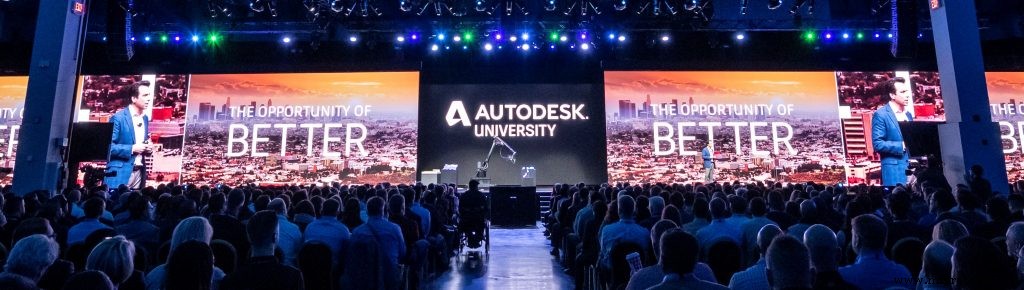
Well, Autodesk University est notre user conference que we've had for a number of years et it's really a user-driven conference. We have our customers actually teach a lot of classes et provide a lot of the content.
There's a process to be able to determine which sessions get included in the overall agenda. Et yes, we've seen a growing interest in additive at Autodesk University. If you track it, you'll see that there are more additive classes et content at Autodesk University.
We're also looking to partner with consultants in the area et universities. I was recently at MIT, whom we've partnered with, et they've been developing a lot of educational curriculum that focused on the working professional, not college students.
They introduced their course this year et have got a lot of tremendous response. We're working with them to be able to provide that sort of training content et be able to provide Autodesk technology to help with the development of the training content.
We're really looking at outside providers to be able to do a lot of the training et focus on developing the best software experience for our customers et for those being trained.
Sur le challenge de faire un business case pour la FA : comment une entreprise nouvelle à la technologie peut-elle commencer à faire une stratégie d'adoption ? Quels sont certains facteurs à prendre en considération ?
From my view, a lot of companies quand ils start to get involved in additive, start producing parts qui ont été designed using leurs traditional processes. Ils peuvent l'imprimer et it's great to have a 3D printed part in your hand et be able to show it off.
But where it falls apart is quand trying to find le business case. Si une pièce était designed pour casting ou pour machining, often those technologies sont going to be still more cost-efficient, especially in moderate to larger volumes.
Part of the education that needs to happen which aligns with le business case est comment can we provide value to the part ou le component ou le system où l'additif est actually the only way we can provide that additional value.
You look at some of the famous case studies that are out there, tel que le fuel nozzle LEAP de GE — et we had a case study with HP with Penumbra. Those are things où you're actually designing a part for additive from the outset. Avec ça, there's actually performance value que you're achieving.
So it's really being able to designer la partie avec a clean sheet of paper. Obviously, you have to understand la technologie well in order to be able to do that et les software tools need to be able to support that. That's a lot of what we're focused on.
Voyez-vous des opportunités clés pour la FA dans industries ou applications spécifiques ?
Of course, medical et aerospace sont les deux plus gros marchés maintenant. Mais si vous regardez le core market d'Autodesk, qui est pour design et manufacturing, la key opportunity est en machinerie industrielle — small and medium-sized machine shops et manufacturing facilities.
What's interesting for us is we're seeing actually quite a bit of interest from that industry. Ils sont much more conscious de où ils peuvent charger higher rates pour pièces dans those industries que les industries aerospace ou medical.
L'impression 3D pour produits de consommation est aussi starting to get more and more attention.
Quand it comes to hybrid workflows, another area we're seeing interest in est using additive technology pour tooling. That's been huge. Gabarits et fixations ont été utilized avec la technologie pour a long time, et il y a eu some limited applications pour tooling inserts.
But we're seeing quite a bit more interest in l'idée que vous pouvez prototype et créer tooling plus vite using additive, as well as do more iterations. Ils may eventually still go to a traditionally cut tool, mais there's a lot of value que l'additif peut fournir through the process.
Then, there are applications où you only need a few hundred or a few thousand, où additive tooling est a more cost-efficient way to be able to deliver that.
Qu'en est-il de l'additif pour l'industrie construction ? C'en est une qui a été quite slow en termes d'adoption de la technologie et yet there seems to be quite a lot of potential.
Applications pour l'additif dans l'industrie construction est definitely on the Autodesk radar et one that we're monitoring closely. We're very well positioned to do that as construction is a key market that we address.
I think we've all seen the videos de robots printing concrete, mais it goes beyond to being able to create customised nodes pour nouveaux building designs. L'industrie construction is looking to the manufacturing industry pour guidance en termes de comment create more efficient construction processes et to be able to tap into some of the technology que l'industrie manufacturing a utilisée.
Le current rate d'adoption est still very early. Mais I'd say there's quite a bit of interest in the industry et there are some companies that have come up with 3D printing technologies pour construction. C'est une zone we call industrialised construction, qui est really making construction more like a manufacturing factory so they can get the efficiencies of that.
Just like we view additive as one of the tools in the toolbox pour manufacturing, additive will be one of the technologies in the toolbox pour l'industrie construction.
En termes de rôle de la FA dans le manufacturing ecosystem au sens large, la voyez-vous plus comme un outil complémentaire aux méthodes manufacturing traditionnelles ?
L'additif will not replace traditional manufacturing. Mais there will be a role for it as adoption continues to grow. So yes, it can complement. Pour certaines applications, it could replace traditional manufacturing.
Mais we view additive as just another manufacturing technology that's now available to our users, qui sont trying to figure out comment go from a design to manufacture et then to market, whilst doing so in the most cost-efficient way et producing the best quality products pour leurs customers.
L'Industrie 4.0 est un terme qu'on entend quite a bit. Quelle est la vision d'Autodesk de l'Industrie 4.0 ?
Industrie 4.0, digital twins … we do hear these terms a lot.
It's an interesting one parce que we've had feedback from some of our customers saying that Industrie 4.0 is all hype et that it doesn't really apply to them. But then we have other customers qui sont actually getting good value from being able to utilise more artificial intelligence, machine learning et data analytics dans leur overall workflow.
Our view is that in order to be able to really get to the vision of Industrie 4.0, an important first step est to better connect the design and manufacturing workflow.
That's really the promise of Fusion 360. We have a great workflow designed to a machined part within Fusion. You'll start to see that workflow for additive emerge this year. It's really connecting the data between design and manufacturing.
There are obviously connections to downstream processes comme quality control et inspection, supply chain et logistics et so on. Mais if we don't get the design and manufacturing data connected, the vision of Industrie 4.0 will never be realised. So that's really where we're focusing on at the moment: connecting that design to manufacturing workflow.
Quand it comes to actually managing the production side of the additive manufacturing workflow, diriez-vous qu'il y a currently a gap in this process ? Pourriez-vous expliquer plus sur comment vous voyez cette connection being made, especially with data ?
It's a major gap that we see across the manufacturing industry. Just at a data point, we have a lot of customers that use our machining technology pour créer injection moulds. We also do the injection moulding simulation. So we're very well connected with the injection moulding market.
I'm surveying le number of our machining customers to say what percentage of the designs do they receive from their customers that are ready to cut a tool. Their response is always the same. In most cases, they say that that has never happened.
What I characterize it as is that when the designers sont souvent not well-versed in all of the intricacies of their manufacturing process, they're not designing with enough insight into the manufacturing process. When they get done completed with the design, they throw it over to the manufacturing operation.
The next step is what I describe as « then the dance begins » — the dance between design et manufacturing, le back and forth, to be able to get something that meets the design requirements et can be manufactured in the time et the schedule required for the product.
A lot of what we're trying to do is to be able to close that gap. We want to be able to provide designers with more insight into the effects of their design decisions on the manufacturing operation.
It needs to go the opposite way as well. So a manufacturing engineer might look at some opportunities to save some time or cost in the manufacturing operation that would require a design change. They don't have visibility back to the designer to know if they make that change, whether it will violate any of the engineering requirements of the part.
We're really trying to close that gap et be able to provide insight to working professionals along the product development process to be able to have the data they need in the context that they need it in order to be able to make better decisions.
Y a-t-il des trends dans la fabrication additive que vous êtes excited about ?
It's a fast-moving industry. So there are always new companies et technologies that are becoming available. Some of the trends that I'm seeing that I'm particularly interested in is more reinforced plastics. Composites technology is making its way.
There's a number of companies out there that are developing interesting processes for composites, qui give you stiffer parts, more tailored parts et parts that you couldn't manufacture any other way.
Hybrid technology is another emerging trend that's quite interesting. It offers the advantage of being able to use really traditional processes comme welding processes et being able to apply them in a way where you can come up with high-value components at a lower cost et with more design flexibility.
I think we'll continue to see costs coming down speeds improving pour ces processes. I think that is what's driving people to think about using additive for production applications où they only need a thousand parts to be able to get a product out to market.
On the flip side, s'il y avait trois choses que l'industrie needs to accelerate that process, what would they be ?
The first is education.
The second is the certification processes. I've mentioned aerospace et medical, industries that have specific certification processes, mais they're still struggling with to do this for additive.
The third, I think, is the design for additive capability. Complicating things further is the fact that the design requirements for different industries sont different. How do you teach a general class on design for additive with that in mind?
There's also system limitation in the tools. If you look at the handoff between a CAD tool et a print prep tool, the problem is that the CAD tool just outputs an STL file, et you work with that. If you need to modify some things, you have to go back to the CAD tool, re-output the STL file, et then work on modifications. That's not a very efficient process.
On the flip side, being able to have the ability to make changes et quickly see the impact on the printing process, les matériaux que you use, within the CAD environment allows for a lot more iterations et results in a more efficient process.
It's also part of what we're trying to achieve with generative design. Generative design defines the engineering et the business problem that you want to solve, all the variables that you have et then lets the tool produce hundreds of viable design options. You can then quickly sort through those et determine which ones are the most interesting for you to do more analysis on.
Finalement, à quoi ressemble 2019 pour Autodesk ?
You're going to start to see additive workflows show up in Fusion 360.
We'll continue the partnerships that we've already established to create very seamless et efficient workflows pour customers of those machines.
We'll also continue to stay abreast of some of the new technologies like composites or hybrid manufacturing that are coming on the scene et understanding what the use cases et applications are for those technologies et where those converge with our customer base.
Ultimately, we're doubling down on our efforts to bring additive manufacturing to the masses.
Pour en savoir plus sur les solutions d'Autodesk, visitez : https://www.autodesk.com
À propos de Robert Yancey, PhD
Chez Autodesk, Dr Yancey définit la business et industry strategy pour manufacturing production solutions incluant usinage soustractif, impression/fabrication additive, hybride et composites technology. Il est a recognized leader in generative design et manufacturing, advanced simulation, aerospace structural design, et advanced composites. Il holds degrees from MIT, Virginia Tech et University of Dayton en Aerospace et Materials Engineering.
impression en 3D
- Quatre tendances automation émergentes façonnant la fabrication additive
- Au cœur de l'innovation F1 : Pat Warner, responsable FA chez Renault, partage 19 ans d'évolution
- Entretien avec James Hinebaugh, cofondateur d'Expanse Microtechnologies : exploiter la micro-CT aux rayons X pour la qualité en fabrication additive
- Conception générative et impression 3D : construire la fabrication de demain
- Comment le CEO de PostProcess Technologies Jeff Mize élimine le goulot de post-traitement en fabrication additive
- Brian Alexander de Solvay sur la construction de polymères haute performance pour la fabrication additive
- Lancement des AM Fridays et du podcast Additive : vos nouvelles ressources pour l'impression 3D
- Révolutionner la médecine et la dentisterie : la puissance de la fabrication additive
- Comprendre les fichiers SLDPRT et SLDASM : leur rôle dans la fabrication additive