



Mini traceur CNC 2D à partir d'un lecteur DVD recyclé avec shield L293D
Composants et fournitures
- 1 × Arduino UNO (cerveau de la machine)
- 1 × Shield moteur L293D (contrôle moteurs pas-à-pas axes X/Y)
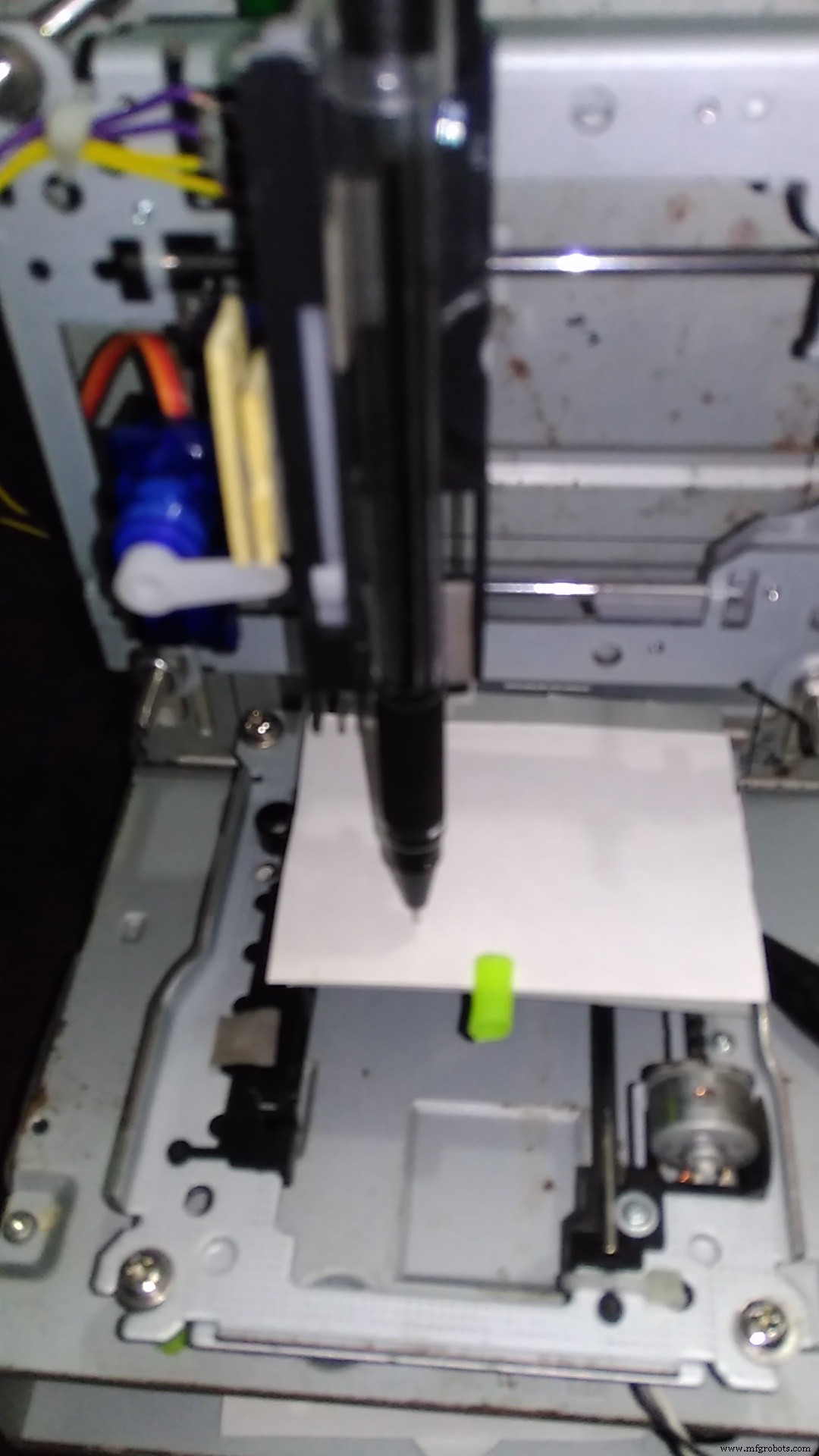
- 1 × Servomoteur Tower Pro 9g (mouvement Z : stylo HAUT/BAS)
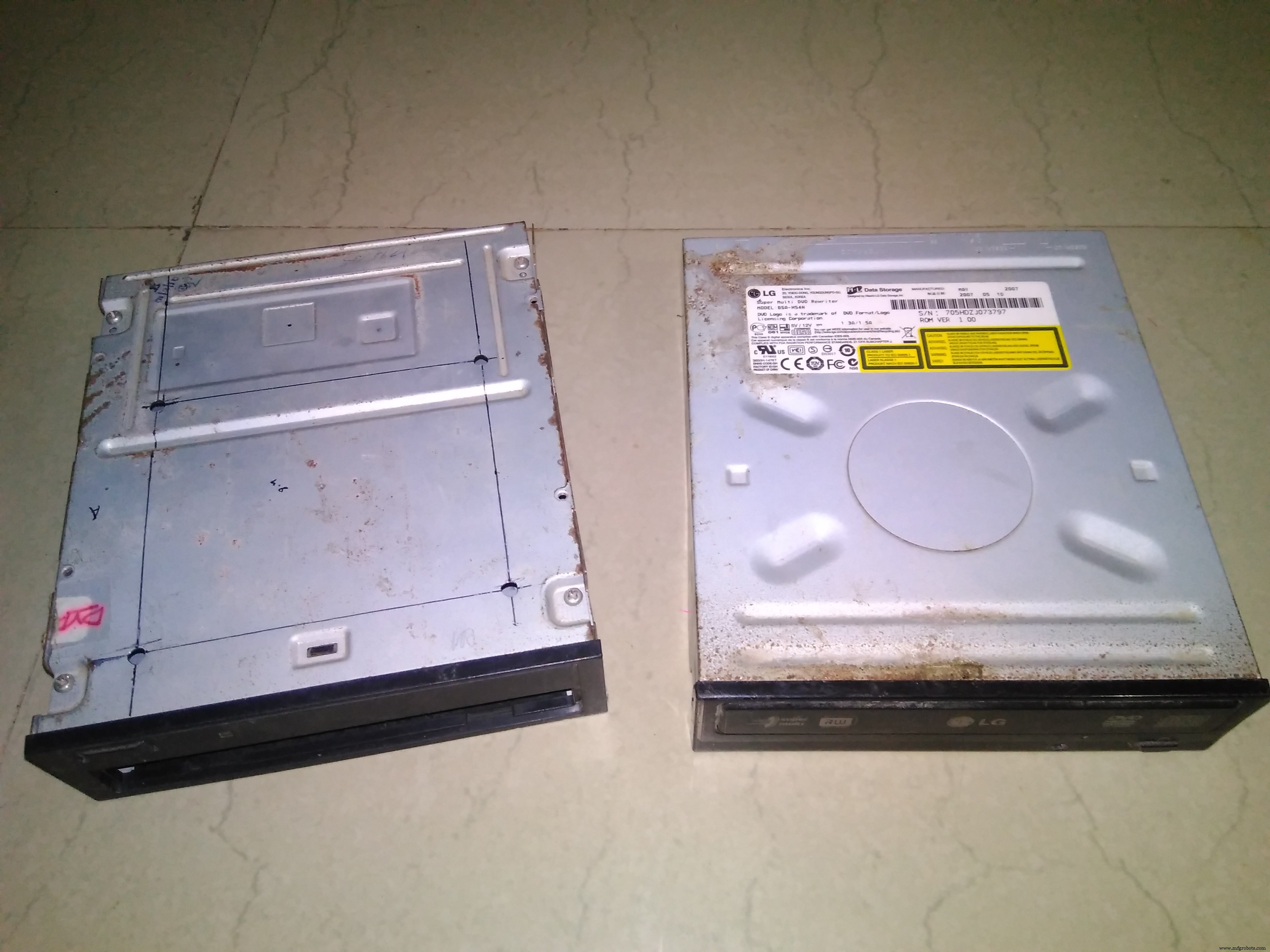
- 1 × Lecteur DVD de récupération (mécanique axes X et Y)
- 1 × Fils de connexion (générique)
Applications et services en ligne
- Arduino IDE
- Processing IDE
- Inkscape (création G-code)
À propos de ce projet
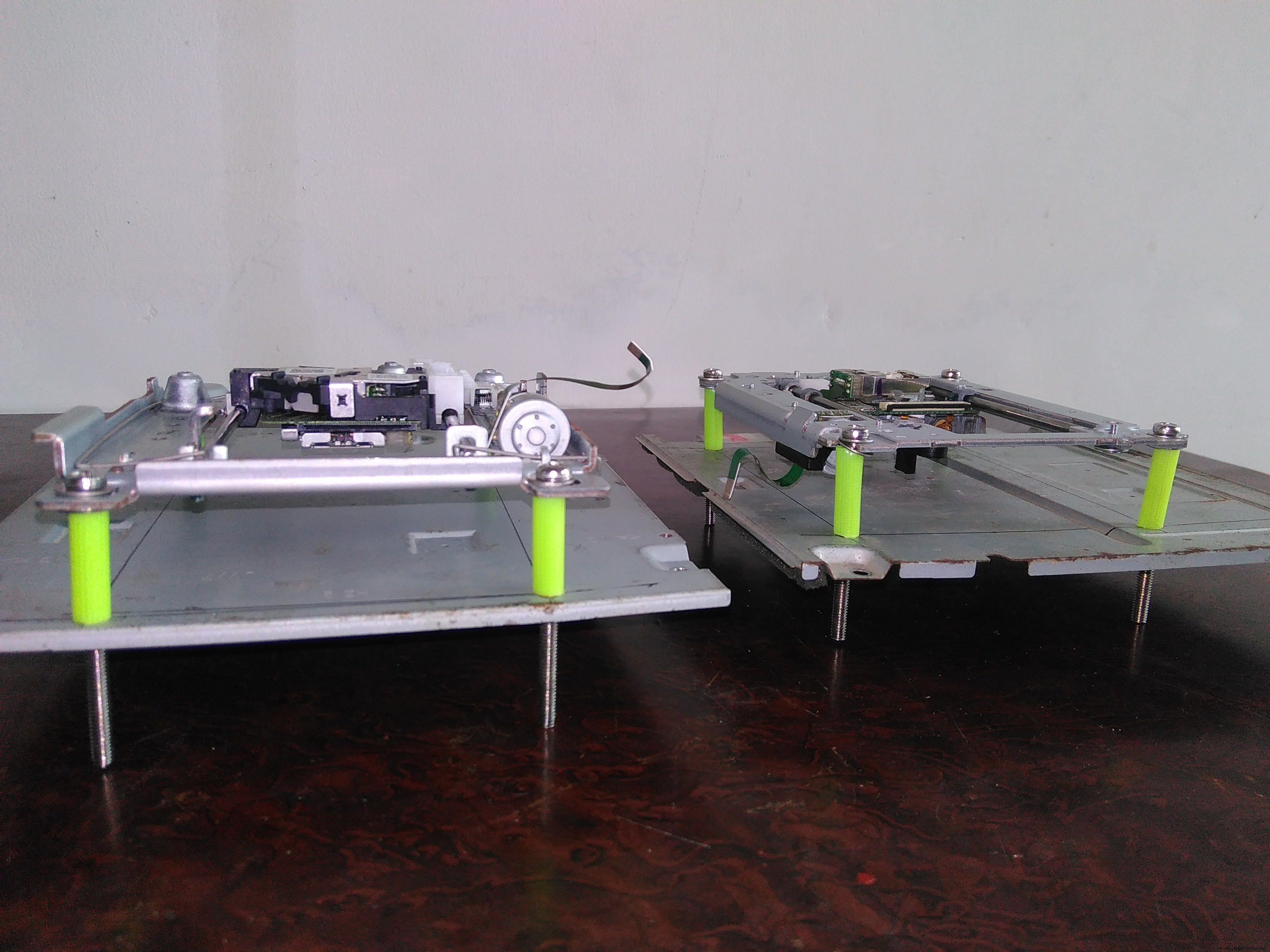
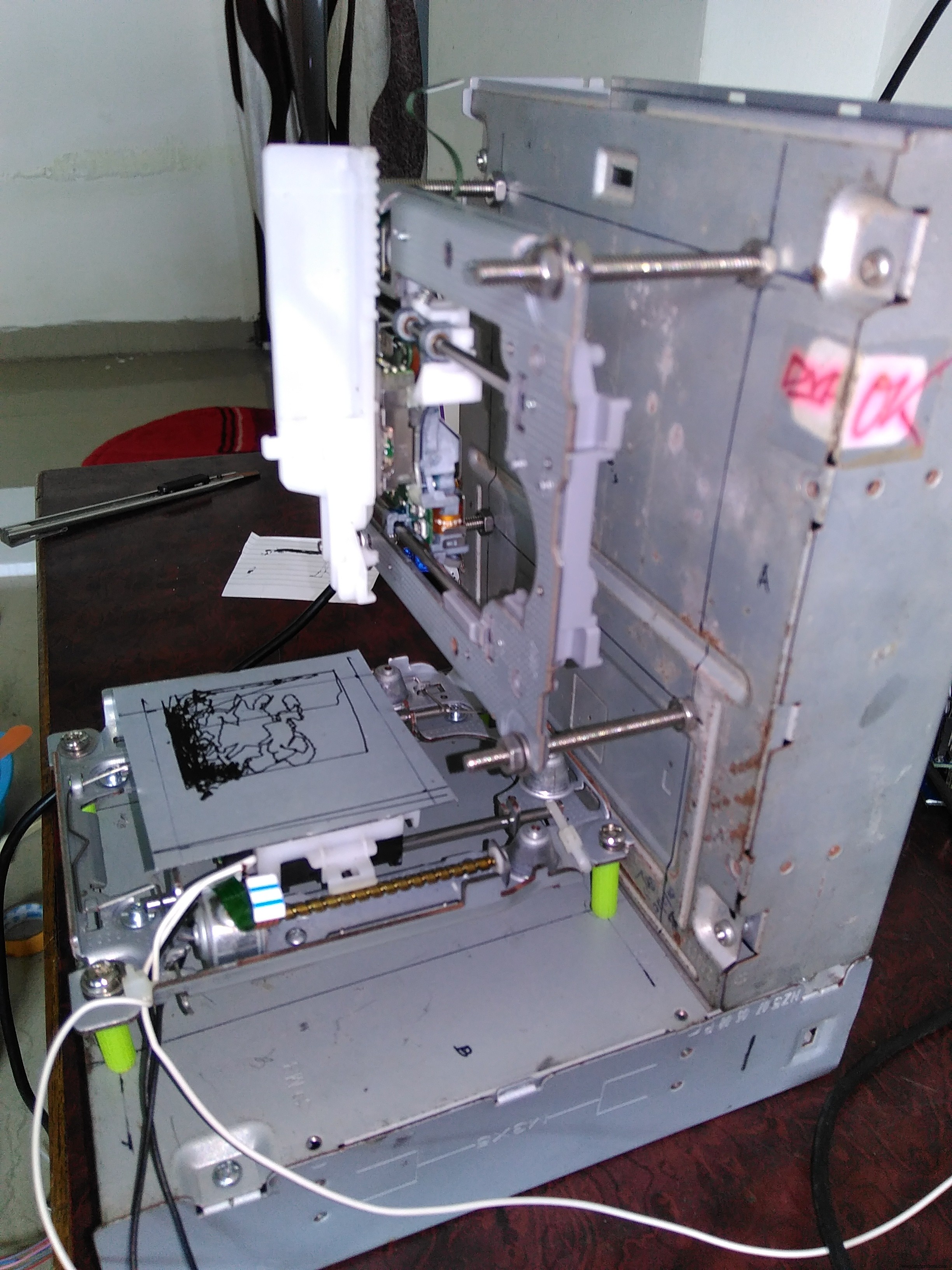
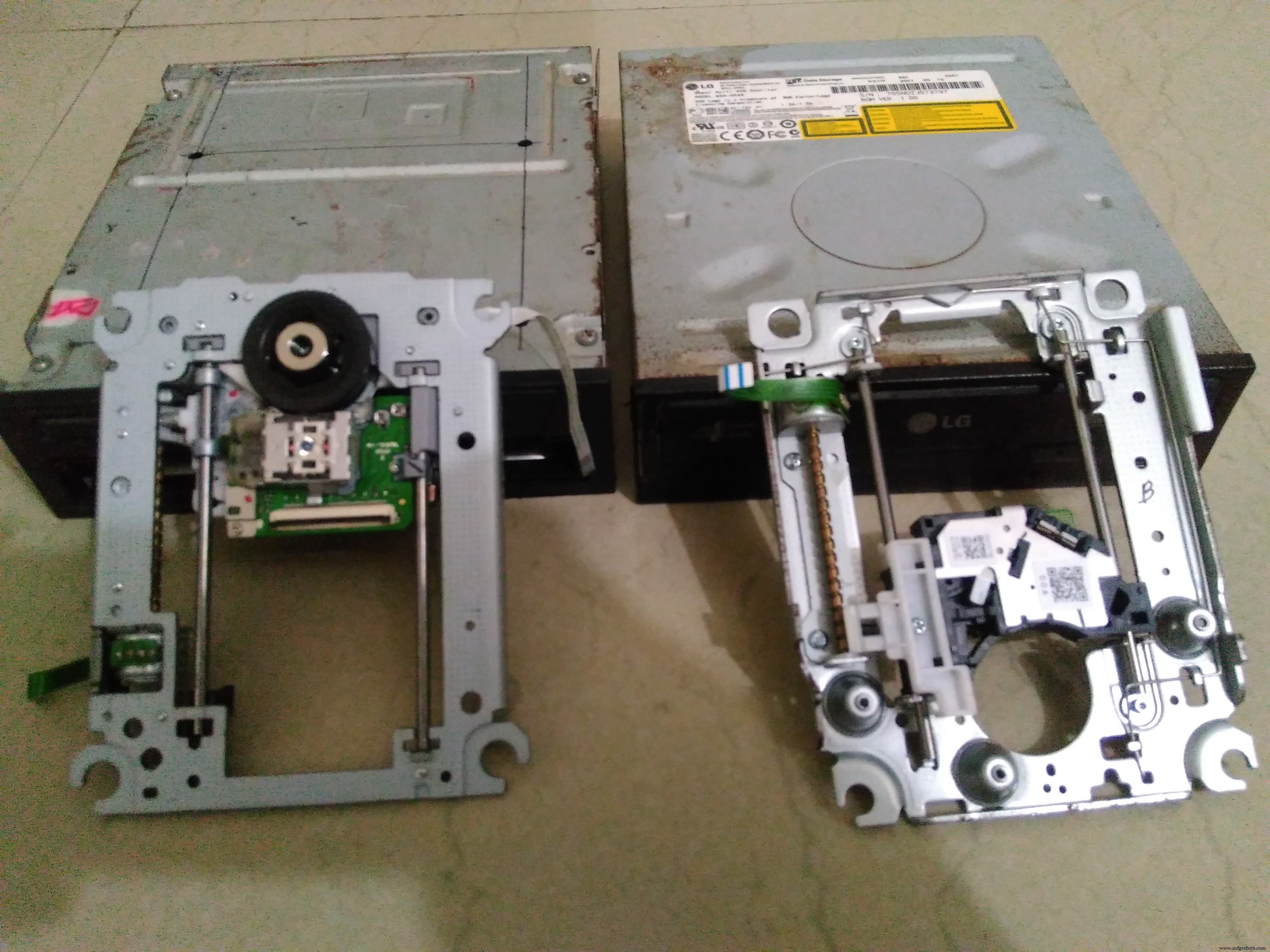
Assembler deux lecteurs DVD de récupération comme sur l'image
- Téléchargez Arduino IDE
- Téléchargez Processing IDE
- Ouvrez Arduino IDE et chargez le code téléchargé ici.
- Ouvrez Processing IDE et chargez le code téléchargé ici.
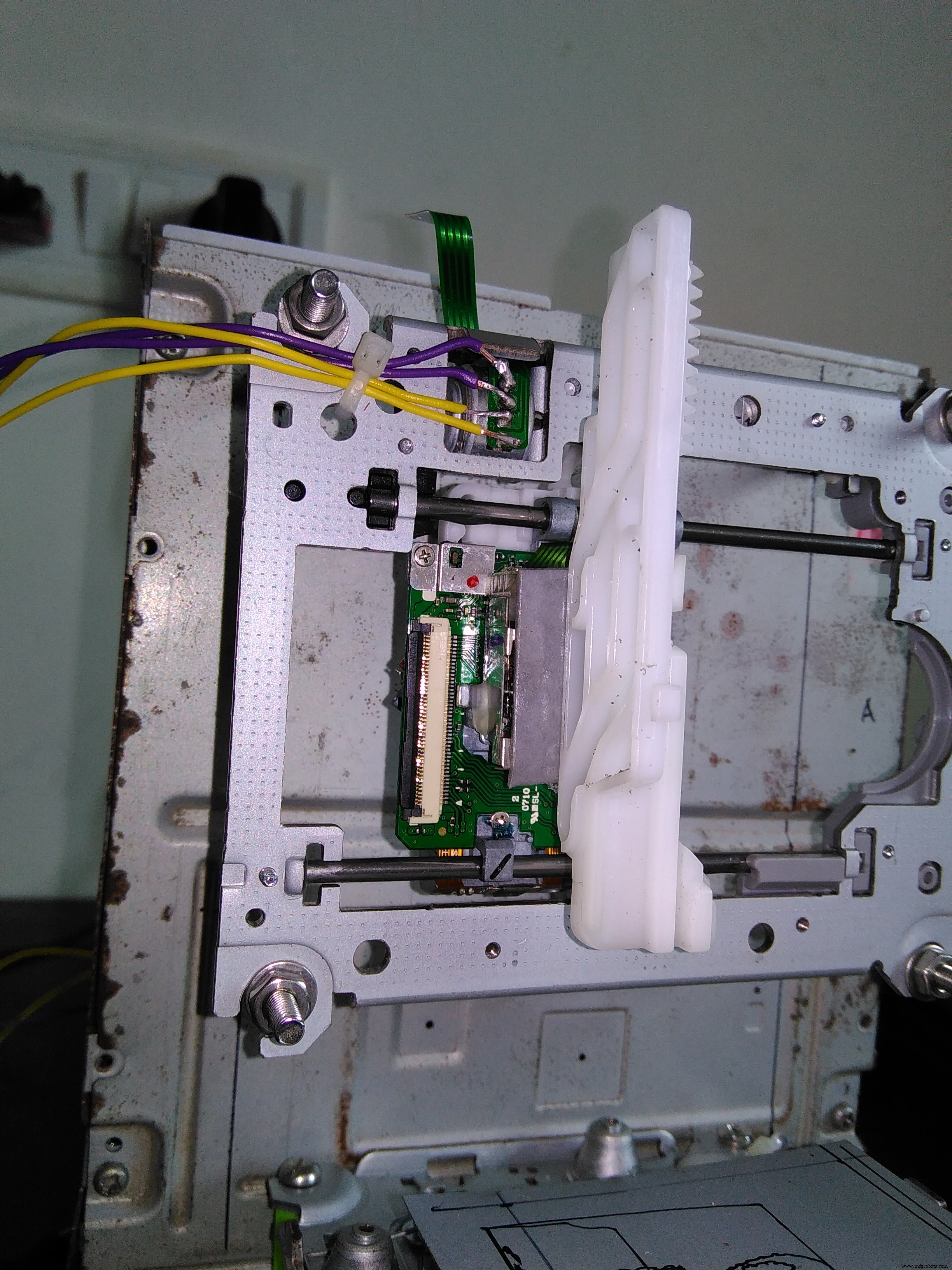
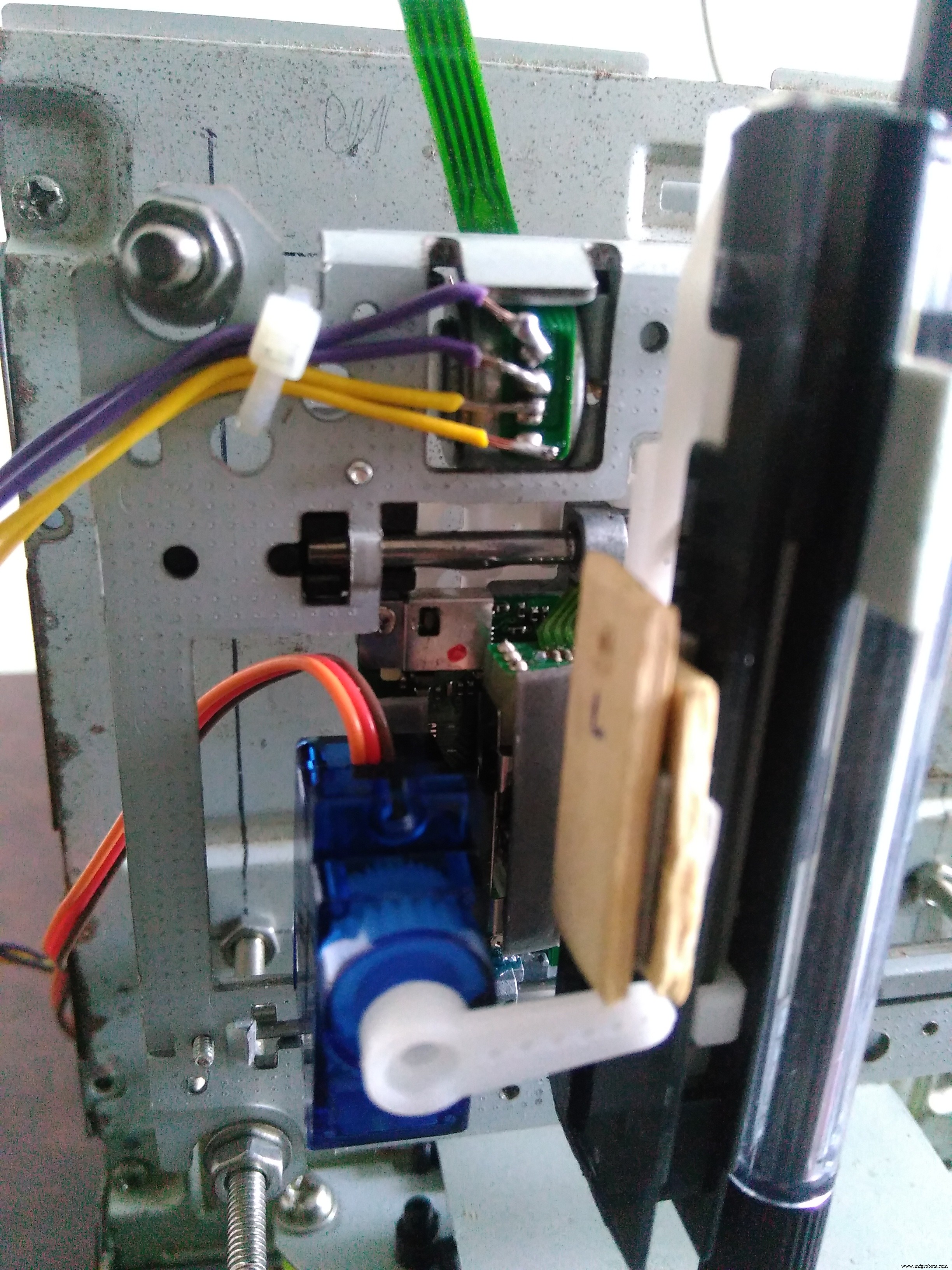
Ouvrez le lecteur DVD et retirez le tiroir interne. Ce tiroir avec son mécanisme pas-à-pas servira d'axes X et Y. Suivez les photos jointes pour l'assemblage. Percez le boîtier DVD vide pour fixer les axes X et Y sur leurs boîtiers respectifs avec écrous/boulons.
Placez-les perpendiculairement l'un à l'autre.
G-code
Pour créer des fichiers G-code compatibles, utilisez Inkscape (logiciel graphique vectoriel pro, gratuit, open source, multiplateforme – standard SVG). Téléchargez la version 0.48.5 (importante).
Installez l'extension d'export G-code (disponible ici avec notes d'installation).
Suivez la vidéo YouTube pour créer un fichier G-code.
- Chargez le fichier
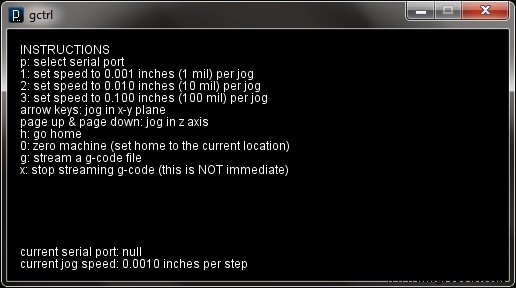
gctrldans Processing IDE et cliquez sur PLAY. - Appuyez sur 'p' pour sélectionner le port série.
- Optionnel : vitesse de jog avec touches 1, 2, 3.
- Appuyez sur 'g' pour charger le fichier G-code.
- Votre machine est prête à tracer dès validation (Entrée) du fichier G-code.
Fichiers G-code prêts à l'emploi :
Merci de votre attention ! Lien complet : ici.
Vidéo de la machine en action : (lien non inclus)
Code
Code Arduino CNC
#include <Servo.h>
#include <AFMotor.h>

#define LINE_BUFFER_LENGTH 512
char STEP = MICROSTEP;

// Position servo stylo HAUT/BAS
const int penZUp = 95;
const int penZDown = 83;
const int penServoPin = 10;

// Pas par révolution (lecteurs DVD)
const int stepsPerRevolution = 48;

Servo penServo;
AF_Stepper myStepperY(stepsPerRevolution, 1);
AF_Stepper myStepperX(stepsPerRevolution, 2);

struct point { float x; float y; float z; };
struct point actuatorPos;

float StepInc = 1;
int StepDelay = 0;
int LineDelay = 0;
int penDelay = 50;

float StepsPerMillimeterX = 100.0;
float StepsPerMillimeterY = 100.0;

float Xmin = 0, Xmax = 40;
float Ymin = 0, Ymax = 40;
float Zmin = 0, Zmax = 1;

float Xpos = Xmin, Ypos = Ymin, Zpos = Zmax;
boolean verbose = false;

void setup() {
  Serial.begin(9600);
  penServo.attach(penServoPin);
  penServo.write(penZUp);
  delay(100);
  myStepperX.setSpeed(600);
  myStepperY.setSpeed(600);
  Serial.println("Mini CNC Plotter alive and kicking!");
  Serial.print("X range: "); Serial.print(Xmin); Serial.print(" to "); Serial.print(Xmax); Serial.println(" mm.");
  Serial.print("Y range: "); Serial.print(Ymin); Serial.print(" to "); Serial.print(Ymax); Serial.println(" mm.");
}

void loop() {
  delay(100);
  char line[LINE_BUFFER_LENGTH];
  char c;
  int lineIndex = 0;
  bool lineIsComment = false, lineSemiColon = false;

  while (1) {
    while (Serial.available() > 0) {
      c = Serial.read();
      if (c == '\n' || c == '\r') {
        if (lineIndex > 0) {
          line[lineIndex] = '\0';
          if (verbose) { Serial.print("Received: "); Serial.println(line); }
          processIncomingLine(line, lineIndex);
          lineIndex = 0;
        }
        lineIsComment = false;
        lineSemiColon = false;
        Serial.println("ok");
      } else {
        if (lineIsComment || lineSemiColon) {
          if (c == ')') lineIsComment = false;
        } else {
          if (c <= ' ') { /* ignore whitespace */ }
          else if (c == '/') { /* block delete not supported */ }
          else if (c == '(') { lineIsComment = true; }
          else if (c == ';') { lineSemiColon = true; }
          else if (lineIndex >= LINE_BUFFER_LENGTH - 1) {
            Serial.println("ERROR - lineBuffer overflow");
            lineIsComment = false; lineSemiColon = false;
          } else if (c >= 'a' && c <= 'z') {
            line[lineIndex++] = c - 'a' + 'A';
          } else {
            line[lineIndex++] = c;
          }
        }
      }
    }
  }
}

void processIncomingLine(char* line, int charNB) {
  int currentIndex = 0;
  char buffer[64];
  struct point newPos = {0, 0, 0};

  while (currentIndex < charNB) {
    switch (line[currentIndex++]) {
      case 'U': penUp(); break;
      case 'D': penDown(); break;
      case 'G':
        buffer[0] = line[currentIndex++];
        buffer[1] = '\0';
        switch (atoi(buffer)) {
          case 0: case 1: { // G0/G1 mouvement
            char* indexX = strchr(line + currentIndex, 'X');
            char* indexY = strchr(line + currentIndex, 'Y');
            if (indexY == NULL) {
              newPos.x = atof(indexX + 1);
              newPos.y = actuatorPos.y;
            } else if (indexX == NULL) {
              newPos.y = atof(indexY + 1);
              newPos.x = actuatorPos.x;
            } else {
              newPos.y = atof(indexY + 1);
              *indexY = '\0';
              newPos.x = atof(indexX + 1);
            }
            drawLine(newPos.x, newPos.y);
            actuatorPos.x = newPos.x;
            actuatorPos.y = newPos.y;
            break;
          }
        }
        break;
      case 'M':
        buffer[0] = line[currentIndex++];
        buffer[1] = line[currentIndex++];
        buffer[2] = line[currentIndex++];
        buffer[3] = '\0';
        switch (atoi(buffer)) {
          case 300: { // M300 stylo
            char* indexS = strchr(line + currentIndex, 'S');
            float Spos = atof(indexS + 1);
            if (Spos == 30) penDown();
            if (Spos == 50) penUp();
            break;
          }
          case 114: // M114 position
            Serial.print("Absolute position: X = "); Serial.print(actuatorPos.x);
            Serial.print(" - Y = "); Serial.println(actuatorPos.y);
            break;
          default:
            Serial.print("Command not recognized: M"); Serial.println(buffer);
        }
        break;
    }
  }
}

void drawLine(float x1, float y1) {
  if (verbose) { Serial.print("fx1, fy1: "); Serial.print(x1); Serial.print(","); Serial.print(y1); Serial.println(); }
  if (x1 >= Xmax) x1 = Xmax;
  if (x1 <= Xmin) x1 = Xmin;
  if (y1 >= Ymax) y1 = Ymax;
  if (y1 <= Ymin) y1 = Ymin;
  if (verbose) { Serial.print("Xpos, Ypos: "); Serial.print(Xpos); Serial.print(","); Serial.print(Ypos); Serial.println(); }
  if (verbose) { Serial.print("x1, y1: "); Serial.print(x1); Serial.print(","); Serial.print(y1); Serial.println(); }

  x1 = (int)(x1 * StepsPerMillimeterX);
  y1 = (int)(y1 * StepsPerMillimeterY);
  float x0 = Xpos, y0 = Ypos;

  long dx = abs(x1 - x0);
  long dy = abs(y1 - y0);
  int sx = (x0 < x1) ? StepInc : -StepInc;
  int sy = (y0 < y1) ? StepInc : -StepInc;
  long i, over = 0;

  if (dx > dy) {
    for (i = 0; i < dx; ++i) {
      myStepperX.onestep(sx, STEP);
      over += dy;
      if (over >= dx) { over -= dx; myStepperY.onestep(sy, STEP); }
      delay(StepDelay);
    }
  } else {
    for (i = 0; i < dy; ++i) {
      myStepperY.onestep(sy, STEP);
      over += dx;
      if (over >= dy) { over -= dy; myStepperX.onestep(sx, STEP); }
      delay(StepDelay);
    }
  }

  if (verbose) { Serial.print("dx, dy:"); Serial.print(dx); Serial.print(","); Serial.print(dy); Serial.println(); }
  if (verbose) { Serial.print("Going to ("); Serial.print(x0); Serial.print(","); Serial.print(y0); Serial.println(")"); }

  delay(LineDelay);
  Xpos = x1; Ypos = y1;
}

void penUp() {
  penServo.write(penZUp);
  delay(penDelay);
  Zpos = Zmax;
  digitalWrite(15, LOW); digitalWrite(16, HIGH);
  if (verbose) Serial.println("Pen up!");
}

void penDown() {
  penServo.write(penZDown);
  delay(penDelay);
  Zpos = Zmin;
  digitalWrite(15, HIGH); digitalWrite(16, LOW);
  if (verbose) Serial.println("Pen down.");
}
Code Processing (Java)
import java.awt.event.KeyEvent;
import javax.swing.JOptionPane;
import processing.serial.*;

Serial port = null;
String portname = null; // null = interactif (touche 'p')
// String portname = Serial.list()[0]; // Mac
// String portname = "/dev/ttyUSB0"; // Linux
// String portname = "COM6"; // Windows

boolean streaming = false;
float speed = 0.001;
String[] gcode;
int i = 0;

void openSerialPort() {
  if (portname == null) return;
  if (port != null) port.stop();
  port = new Serial(this, portname, 9600);
  port.bufferUntil('\n');
}

void selectSerialPort() {
  String result = (String) JOptionPane.showInputDialog(frame,
    "Select the serial port that corresponds to your Arduino board.",
    "Select serial port", JOptionPane.QUESTION_MESSAGE, null, Serial.list(), 0);
  if (result != null) { portname = result; openSerialPort(); }
}

void setup() {
  size(500, 250);
  openSerialPort();
}

void draw() {
  background(0);
  fill(255);
  int y = 24, dy = 12;
  text("INSTRUCTIONS", 12, y); y += dy;
  text("p: select serial port", 12, y); y += dy;
  text("1: speed 0.001 in (1 mil)/jog", 12, y); y += dy;
  text("2: speed 0.010 in (10 mil)/jog", 12, y); y += dy;
  text("3: speed 0.100 in (100 mil)/jog", 12, y); y += dy;
  text("arrow keys: jog X-Y", 12, y); y += dy;
  text("page up/down: jog Z", 12, y); y += dy;
  text("$: display grbl settings", 12, y); y += dy;
  text("h: go home", 12, y); y += dy;
  text("0: zero machine (set home here)", 12, y); y += dy;
  text("g: stream g-code file", 12, y); y += dy;
  text("x: stop streaming (not immediate)", 12, y); y += dy;
  y = height - dy;
  text("current jog speed: " + speed + " in/step", 12, y); y -= dy;
  text("current serial port: " + portname, 12, y); y -= dy;
}

void keyPressed() {
  if (key == '1') speed = 0.001;
  if (key == '2') speed = 0.01;
  if (key == '3') speed = 0.1;

  if (!streaming) {
    if (keyCode == LEFT)  port.write("G91\nG20\nG00 X-" + speed + " Y0.000 Z0.000\n");
    if (keyCode == RIGHT) port.write("G91\nG20\nG00 X" + speed + " Y0.000 Z0.000\n");
    if (keyCode == UP)    port.write("G91\nG20\nG00 X0.000 Y" + speed + " Z0.000\n");
    if (keyCode == DOWN)  port.write("G91\nG20\nG00 X0.000 Y-" + speed + " Z0.000\n");
    if (keyCode == KeyEvent.VK_PAGE_UP)   port.write("G91\nG20\nG00 X0.000 Y0.000 Z" + speed + "\n");
    if (keyCode == KeyEvent.VK_PAGE_DOWN) port.write("G91\nG20\nG00 X0.000 Y0.000 Z-" + speed + "\n");
    if (key == 'h') port.write("G90\nG20\nG00 X0.000 Y0.000 Z0.000\n");
    if (key == 'v') port.write("$0=75\n$1=74\n$2=75\n");
    if (key == 's') port.write("$3=10\n");
    if (key == 'e') port.write("$16=1\n");
    if (key == 'd') port.write("$16=0\n");
    if (key == '0') openSerialPort();
    if (key == 'p') selectSerialPort();
    if (key == '$') port.write("$$\n");
  }

  if (!streaming && key == 'g') {
    gcode = null; i = 0;
    println("Loading file...");
    selectInput("Select a file to process:", "fileSelected", null);
  }
  if (key == 'x') streaming = false;
}

void fileSelected(java.io.File selection) {
  if (selection == null) { println("Window closed or cancelled."); return; }
  println("User selected " + selection.getAbsolutePath());
  gcode = loadStrings(selection.getAbsolutePath());
  if (gcode == null) return;
  streaming = true;
  stream();
}

void stream() {
  if (!streaming) return;
  while (true) {
    if (i == gcode.length) { streaming = false; return; }
    if (gcode[i].trim().length() == 0) i++; else break;
  }
  println(gcode[i]);
  port.write(gcode[i] + '\n');
  i++;
}

void serialEvent(Serial p) {
  String s = p.readStringUntil('\n');
  println(s.trim());
  if (s.trim().startsWith("ok")) stream();
  if (s.trim().startsWith("error")) stream(); // XXX: really?
}
Schémas
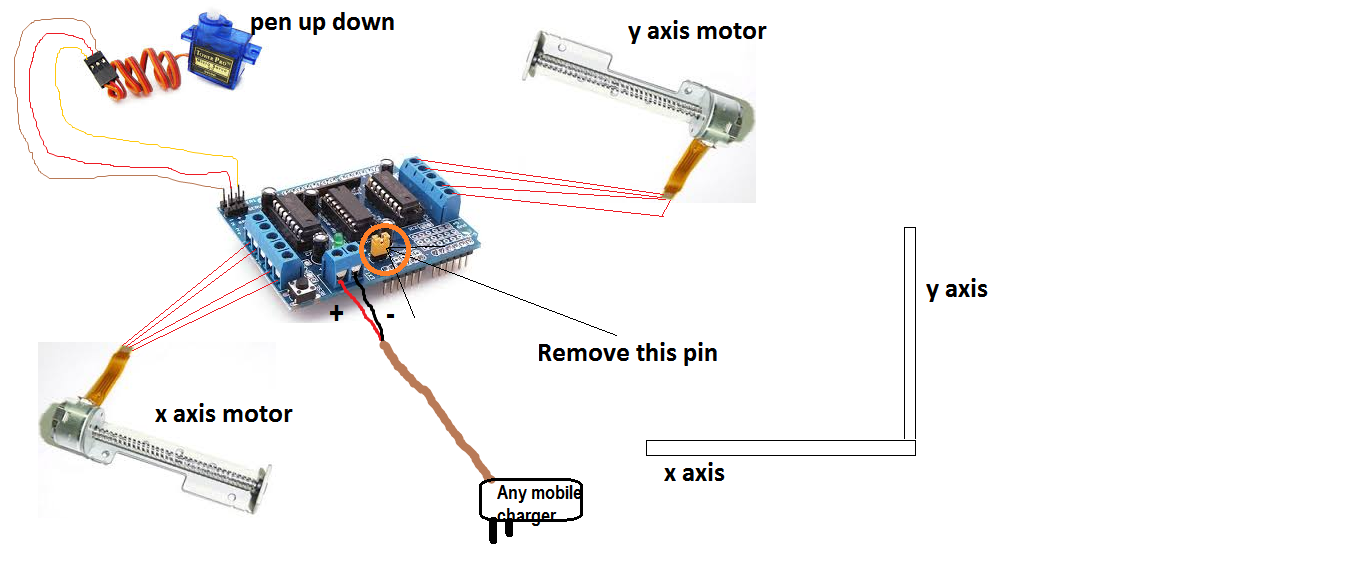
Connectez tous les composants comme indiqué :
Processus de fabrication
- Construire sa propre machine à écrire les devoirs à la maison (Traceur à stylo)
- Créer un système Ambilight spectaculaire pour moniteur avec Arduino
- Robot de détection humaine basé sur Arduino Uno : Intégration capteurs étape par étape
- Véhicule Télécommandé par Android avec Raspberry Pi et Shield Moteur
- Créer un bouton clavier personnalisé « frappable » avec Arduino : guide pas à pas
- Mesurer la masse de la Terre avec Arduino : Guide DIY étape par étape
- Créer une interface web PHP pour contrôler votre Arduino Uno
- Générer des Sons Musicaux avec Arduino : Guide Pas à Pas
- Construire une Boussole Numérique Temps Réel avec Arduino et Processing